
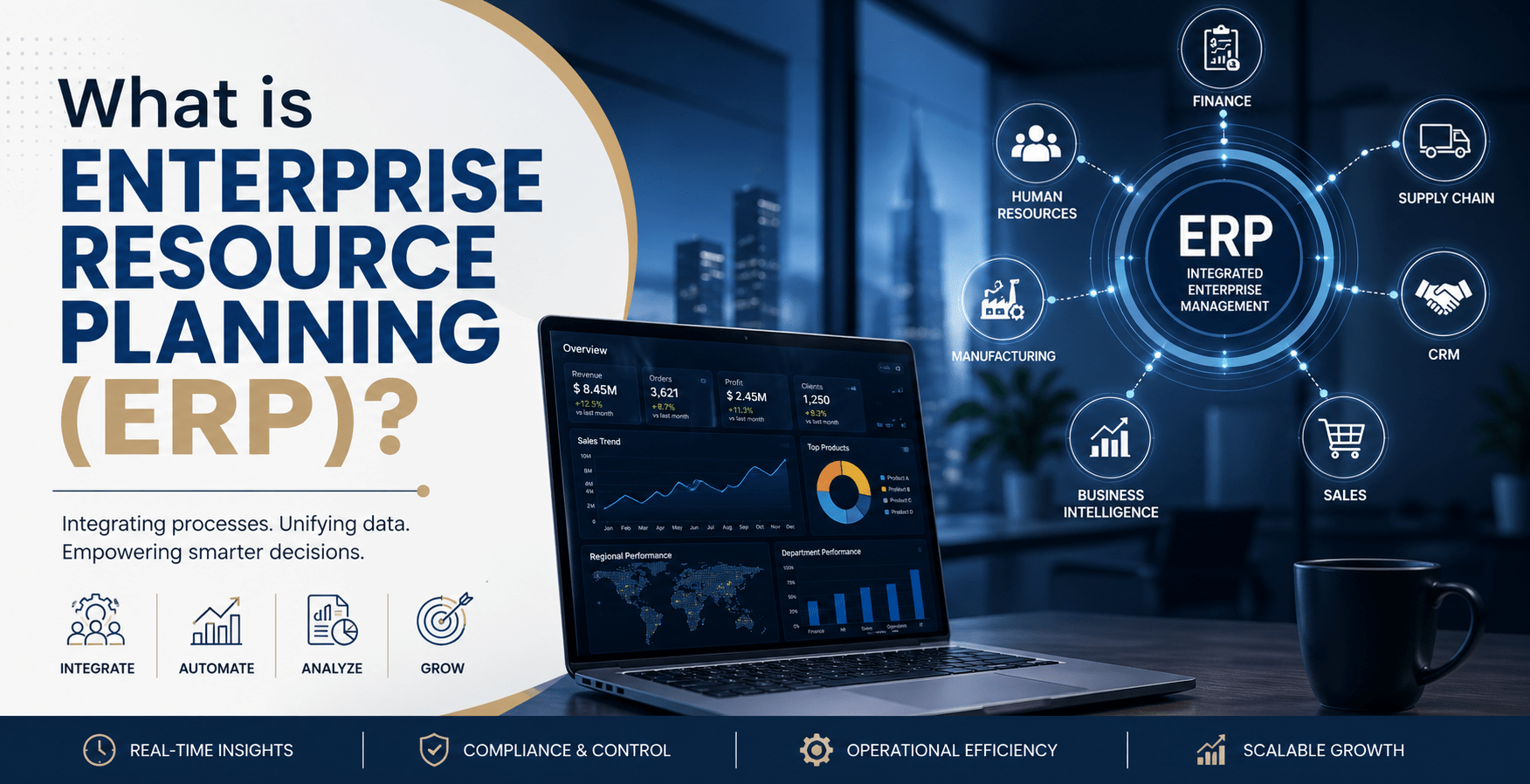
What is Enterprise Resource Planning (ERP)?
WhatsApp: 0332-2223257, E-mail: Info@smartcampuses.com
INTRODUCTION:
It is important to note that as businesses develop and change in the current dynamic environment, many companies in Pakistan and the Middle East have been embracing integrated business systems to remain competitive. This raises the question of what ERP entails. Essentially, ERP involves having a centralized computerized system that integrates the various aspects of a business organization.
Enterprise relates to organizations that have a complex nature in terms of operations and are composed of various departments such as financial, human resource, logistics, marketing, etc. An ERP system ensures that the various aspects of an organization are synchronized and working efficiently.
The increasing size of firms leads to increasing volume of data generated and therefore the need to harness this data as soon as possible. ERP, together with related technologies such as BI and CRM systems, ensures that data is converted into business intelligence.
ENTERPRISE ISSUES
There are various issues faced by today’s enterprises that inhibit their ability to grow and operate effectively:
Operational Issues
Processes that are manual, inefficient, and repetitive result in inefficiencies and higher costs.
Isolated Data
Departments that operate in silos can result in isolated data sets, which make it harder to have a holistic picture of how well the company is performing.
Non-compliance and Ineffective Reporting
In the Middle East, it is crucial that reporting takes place accurately and in a timely fashion. Failure to do so makes it difficult for companies to remain compliant.
All of these issues underscore the importance of an ERP framework.
Strategic Value of ERP / BI / SAP
Informed Decision Making
ERP software, used with BI tools, delivers instant analysis and visual reports. Therefore, decision makers are able to base their choices on solid facts instead of guessing.
Automation and Integration
ERP solutions like SAP ERP and cloud-based ERP applications unify all business operations and automate them. Thus, errors are minimized, time is saved, and processes are streamlined.
Consultancy and Training
ERP adoption requires employee participation. With professional consultancy and adequate training, employees become proficient users of ERP, ensuring ROI on ERP investment.
Advantages
- Real-Time Reporting: Availability of business information at the click of a button
- Standardization: Standard processes for all departments
- Scalability: Flexible systems to scale as per growth needs
- Lower Costs: Savings in operations and administration costs
- Greater Visibility: Increased visibility on performance
IMPLEMENTATION VIEWPOINT
Best Practices
A successful ERP implementation starts with establishing proper goals, having stakeholders agree on those goals, and creating an effective plan of action. Before implementing the system, organizations need to assess their current procedures.
Necessity of Having Qualified Consultants
Consultants can play a big role in ERP projects by providing their industry experience and technical skills when customizing and integrating the system.
Phased Implementation Strategy
Instead of a full transformation, companies opt for a phased approach in which the process happens gradually.
CONCLUSION:
It is imperative that one gets acquainted with the basics of Enterprise Resource Planning (ERP) to ensure modernization and sustainable growth for the enterprise in question. An ERP software system acts as the core component of digital transformation efforts within an organization.
For businesses operating in Pakistan and the Middle East region, implementing an ERP solution should be more than just a technical consideration; it must become a strategic priority.
WhatsApp: 0332-2223257, E-mail: Info@smartcampuses.com